
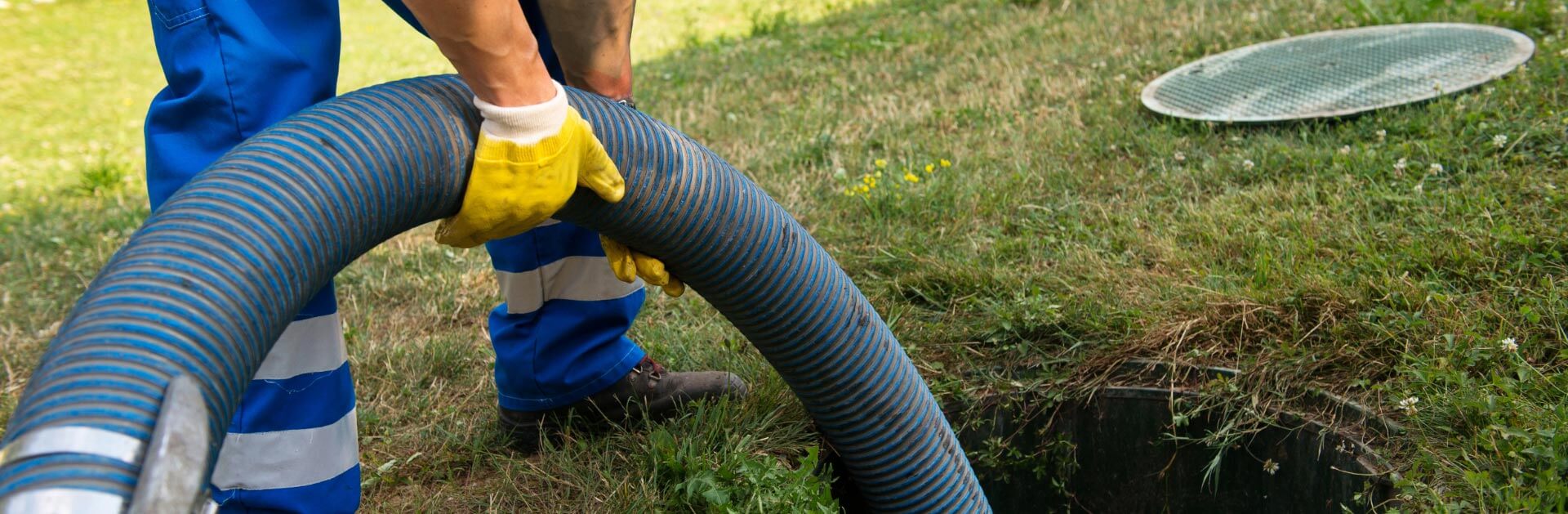

Most North Georgia homeowners who live on septic know two things about their system: it’s underground somewhere in the yard, and the pump-out truck comes every few years. Everything else — how the system actually processes waste, what makes it fail, and what homeowner behavior directly affects its lifespan — is a blank that most people never fill in.
Understanding the basic mechanics of how a septic system works changes how homeowners maintain it — and the homeowners who understand it consistently avoid the expensive failures that surprise those who don’t.
The Four Components That Make Up a Complete Septic System
- The septic tank: A watertight underground container — typically concrete or fiberglass — that receives all wastewater from the home. Inside the tank, waste separates into three layers: solids sink to the bottom and form sludge; fats, oils, and greases float to the top and form scum; and the liquid middle layer (effluent) is what exits the tank and flows to the drain field. Naturally occurring anaerobic bacteria in the tank digest some of the solid material, but not all — which is why the tank must be pumped periodically to remove accumulated sludge and scum before they reach the outlet pipes.
- The distribution system: After clarified effluent exits the tank, it moves through distribution pipes to the drain field. Distribution boxes split the flow evenly across multiple laterals. When a distribution box is damaged or settled, uneven flow concentrates effluent in one section of the field while the rest goes unused — accelerating failure in the overloaded section.
- The drain field (leach field): The drain field is where treatment actually happens. Perforated pipes laid in gravel-filled trenches distribute effluent across a large area of soil. As the effluent percolates through the soil, the soil’s natural biological and physical processes filter out pathogens, nutrients, and residual contaminants. Healthy soil and adequate percolation rate are the keys to drain field function — which is why soil conditions must be evaluated before a drain field is permitted and installed.
- The soil: Often overlooked as a “component,” the native soil beneath and surrounding the drain field is doing the primary treatment work. When the soil becomes saturated, compacted, or biomat-clogged, effluent can no longer percolate — and the drain field fails.
What Causes Drain Fields to Fail
Understanding how drain fields fail helps homeowners avoid the behaviors that accelerate failure.
- Biomat formation: The most common cause of drain field failure. Biomat is a biological film — a layer of microbial growth and organic matter — that forms where effluent enters the soil. A healthy system forms biomat gradually, and the drain field area is large enough that the biomat doesn’t overwhelm percolation. Excessive water use that hydraulically overloads the field, solids that escape the tank because of missed pump-outs, and certain household products that disrupt bacterial balance all accelerate biomat formation beyond the system’s capacity to manage.
- Hydraulic overloading: When the volume of water entering the drain field exceeds its absorption capacity, effluent can’t percolate and begins to saturate the soil or surface above the field. Extended household guests, water-intensive appliances running simultaneously, or a leaking toilet contributing thousands of gallons of unnecessary flow can overload a system.
- Solids carryover: When the tank is not pumped on schedule, sludge and scum levels rise to the point where they begin exiting the tank and entering the drain field. Solids in the drain field accelerate biomat formation dramatically — and cause physical clogging of the perforated pipes.
- Physical damage: Driving or parking vehicles over the drain field compresses the soil and can crush lateral pipes. Tree roots seeking moisture can infiltrate and obstruct the pipes. These are preventable — knowing where the drain field is located and protecting that area are the simplest maintenance actions available.
What Homeowners Can Control
The single most impactful maintenance action is regular pump-outs — typically every three to five years depending on household size and tank size. A tank pumped on schedule doesn’t develop solids carryover. Solids that never reach the drain field can’t cause biomat acceleration.
Water conservation reduces hydraulic load. Spreading laundry loads across the week rather than concentrating them on Saturday reduces peak flow. Fixing leaking toilets immediately eliminates a significant source of unnecessary volume.
Avoiding the drain — grease, “flushable” wipes, harsh chemical drain cleaners, excessive antibacterial soap — protects the bacterial ecosystem that makes the tank function.
Schedule Your Maintenance Appointment With Metro Septic
Metro Septic and Plumbing serves homeowners throughout Cartersville, Kennesaw, Marietta, Acworth, Canton, Woodstock, Smyrna, Rome, and the greater Atlanta metro area 24/7. Call (678) 873-7934 to schedule your pump-out or system inspection. The homeowner who understands how the system works is the one who protects it — and the protection is always less expensive than the repair it prevents.
The Pumping Schedule — and Why It’s the Simplest Insurance Available
Most septic professionals recommend pumping every three to five years for a standard household. The specific interval depends on tank size and household occupancy: a 1,000-gallon tank serving a two-person household accumulates solids more slowly than the same tank serving a family of five.
What happens when the schedule slips: sludge and scum levels rise toward the outlet pipe. Once solids begin exiting the tank — which happens gradually before the homeowner notices any symptoms — they enter the distribution system and drain field. Solids in the drain field accelerate biomat formation and can clog the perforated pipes in ways that produce the same outcome as drain field failure from other causes: surfacing effluent, backups in the home, and a drain field that needs to be replaced.
The pump-out that prevents this costs several hundred dollars. The drain field replacement it prevents costs five to twenty thousand. The math is not ambiguous.
For homeowners who aren’t sure when the tank was last pumped — a very common situation for anyone who has moved into a home with an existing system — scheduling an inspection and pump-out is the simplest possible reset. Metro Septic will assess the sludge and scum levels, inspect the tank interior, and verify that the system is in appropriate working order.
Call (678) 873-7934 to schedule. The homeowner who understands how the system works takes better care of it — and the care Metro Septic provides starts with the conversation.